

Author: Abby Grunewald

Employee Spotlight: Tyler Henn
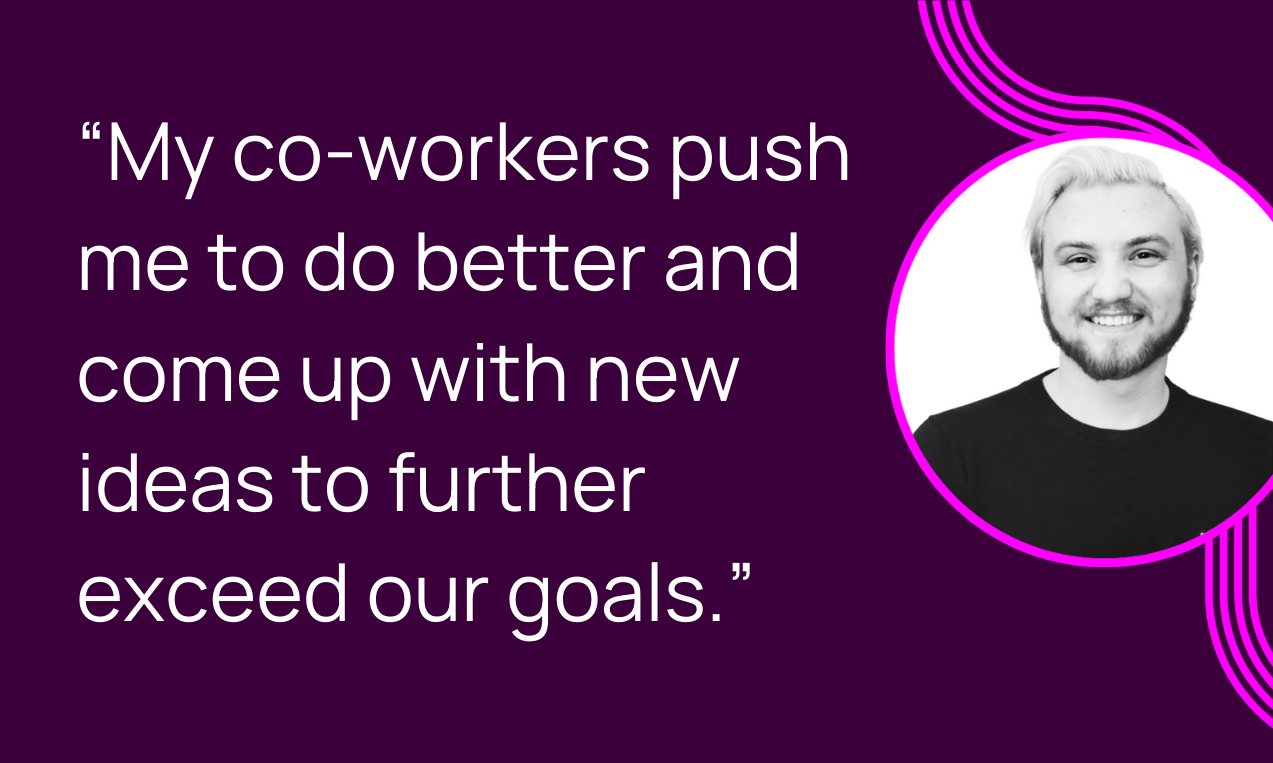
At Ideon, we’re proud to have such a talented, diverse team leading the charge for a better and more connected health insurance and employee benefits industry. Our ongoing Employee Spotlight series showcases the people behind our product and unveils what life is like at Ideon. Next up… Tyler Henn, our Quality Assurance Coordinator!
Name: Tyler Henn
Department: Data Ops
Title: Quality Assurance Coordinator!
Location: New York
Work
How long have you worked at Ideon?
Two and a half years.
Tell us about your day-to-day.
My day-to-day involves a lot of quality checks on our data — ensuring everything is the way it is supposed to be. I also work on automating our validation checks and coming up with new ideas to further improve our data accuracy.
How have you grown professionally while on our team?
This is my first full-time job, so I have grown quite a bit over the years. All of my co-workers at Ideon have helped to shape me with a focus on being professional and respectful of everyone I work with. They always push me to do better and come up with new ideas to further exceed our goals.
What excites you about the future of Ideon?
I am really excited about Ideon’s growth. Over the last two years I’ve been privileged to witness the company expand from 40 employees to over 100! Seeing that growth is motivating, inspiring, and it’s a big part of why I’ve enjoyed my time at Ideon.
What do you like about Ideon’s company culture?
I love the overall atmosphere of my team and the company as a whole. Everyone is super supportive and I think Ideon really pushes to make sure that our company culture is welcoming and enjoyable.
Life
Favorite activity when you’re not working?
I love to play the board game Catan! And I have found a new obsession with Reality TV.
Favorite place you’ve traveled?
My favorite place I have traveled to would definitely have to be France.
Interesting fact about yourself… Go!
I can’t think of anything, so I am just going to go with the generic response – I am left handed!
How To Help Clients Overcome The Fear Of Using Third-Party Services

Women in Tech: Ideon’s Meghna Misra On The 5 Steps Needed To Create Great Tech Products
Ideon Insights: Beam’s Elek Pew talks distribution strategy as a tech-focused carrier
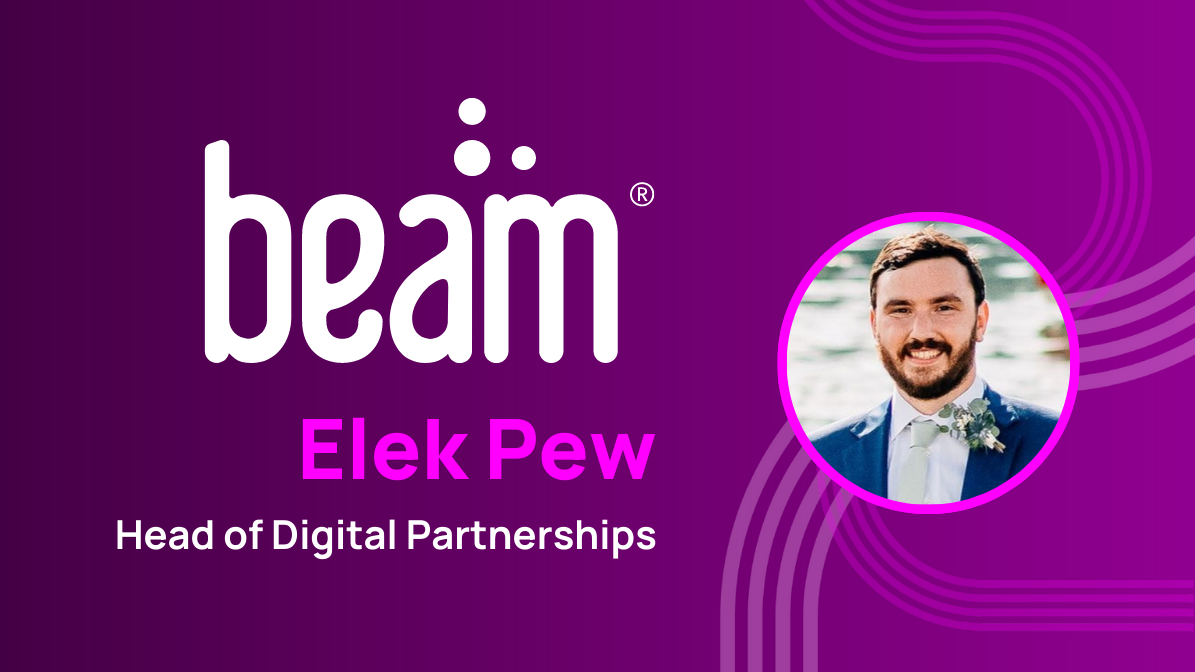
Welcome to the second episode of Ideon Insights, our monthly interview series featuring thought leaders and innovators driving the benefits industry forward. In this episode, we had the pleasure of speaking with Elek Pew, Head of Digital Partnerships at Beam Benefits, an ancillary benefits provider known for its innovation and digital-first approach.
In this Q&A, Elek provides insights into the evolution of the benefits technology ecosystem and the unique advantages that come with being a digitally native carrier. He also delves into how Ideon complements and enhances Beam’s digital distribution strategy, enabling seamless integration and collaboration within the industry.
For Elek’s complete thoughts on digital distribution, partnership strategy, and more, watch the video here.
Below we’ve highlighted six key moments from the conversation.
IDEON: How has the transformation of benefits technology informed your distribution strategy?
ELEK PEW: Technology is really at the forefront of everything today. Efficiency is king, especially in the small group market. We see that brokers care most about being really quick and efficient, so we pride ourselves on meeting those distributors where they are — whether that’s XYZ quoting or enrollment platform, or Beam’s own digital tools.
If they use a third-party system to quote business, we’ll find a way to integrate with that platform whether it’s through Ideon or directly. We’ll meet them where they are.
The benefits ecosystem is getting more complex. How do you choose the right partners?
There are a few things we think about when it comes to partnership strategy.
-
- Do we potentially have access into a limited marketplace, where Beam is one of three or four benefits providers?
- What does the partner’s technology stack look like in terms of their ability to integrate? If a new partner comes to us and says, “we’re already integrated to Ideon” — that’s great for us. We know there’s not a ton of work to activate that new partner, compared to a net-new direct connection.
- How do they think about API connectivity? Are we living in a file-based world? We’ll meet people where they are, but that’s definitely something we think about.
- Are they willing to offer all of our product lines? Beam was historically a dental-first company, but now we’re focused on Beam as an ancillary benefits provider.
How does Ideon fit into your distribution strategy?
We definitely see the value in the partnership with Ideon from a middleware standpoint. As Beam has transitioned from Beam Dental to Beam Benefits — bringing on voluntary life, accident, hospital, and critical illness — our ability to turn those products on through one connection to multiple players in the ecosystem is game-changing. It’s a powerful thing that we want to continue to invest in.
We’ll connect to third-party platforms directly if that’s their preferred method, but we’ll meet folks where they are. Some will say, “we want to connect through Ideon,” and we’re more than happy to make that happen. It makes our jobs a lot easier knowing we have a trusted player in the middle, ensuring that our data is presented accurately and the data Beam gets back is in top fashion.
What are the advantages of being a newer, tech-focused benefits carrier?
Beam is well positioned in the market because, at our core, we’re a digitally native company. The idea of exposing our core functionality—enrollment, admin, quoting, etc.— and embedding our products into the benefits ecosystem really is inherent in how Beam has built core capabilities.
We’re able to go to market really quickly with new platform integrations because we’ve built our systems with the concept of exposability in mind. Now that the market is moving to third-party platforms, we’re well positioned to be able to connect and meet distributors where they are in the marketplace.
Why are rating APIs valuable for Beam and brokers?
Without a rating API, rates could only change once per quarter and it didn’t allow for customization — rates were prepackaged.
With a rating API like the one we’re building with Ideon, we’re able to take in real-time census information and generate a rate based on that specific employee population. We’re able to arrive at much sharper rates because we have more information about the group. It also enables our back office operations to be more efficient because we receive information about the group from that initial employee census.
With an API, we know it will only return rates and plans where Beam will 100% be able to offer the plan — rates are always bindable.
What’s a benefits technology trend you’re excited about over the next few years?
Instantaneous policy issuance — Beam is moving there, and I think the benefits industry overall will move that way, following in the footsteps of the P&C space. The group installation process is still painfully manual today.
The industry has made a lot of progress in terms of carriers accepting enrollment information from platforms and loading it into carrier systems, and we’re seeing instantaneous quoting making its way to the market with rating APIs. The next step is to bridge the gap between the two — take a quoted product, win it, turn it into a bindable policy, then have it ready for employees to enroll in coverage. That experience — quote to bind to enroll — we’re now seeing the foundation that will allow us to get there.
Stay tuned for new episodes of Ideon Insights each month. Subscribe to our newsletter below to stay in-the-know about Ideon and receive our latest content directly to your inbox.
Ideon Insights: Selerix’s Lyle Griffin talks LDEx and benefits data exchange
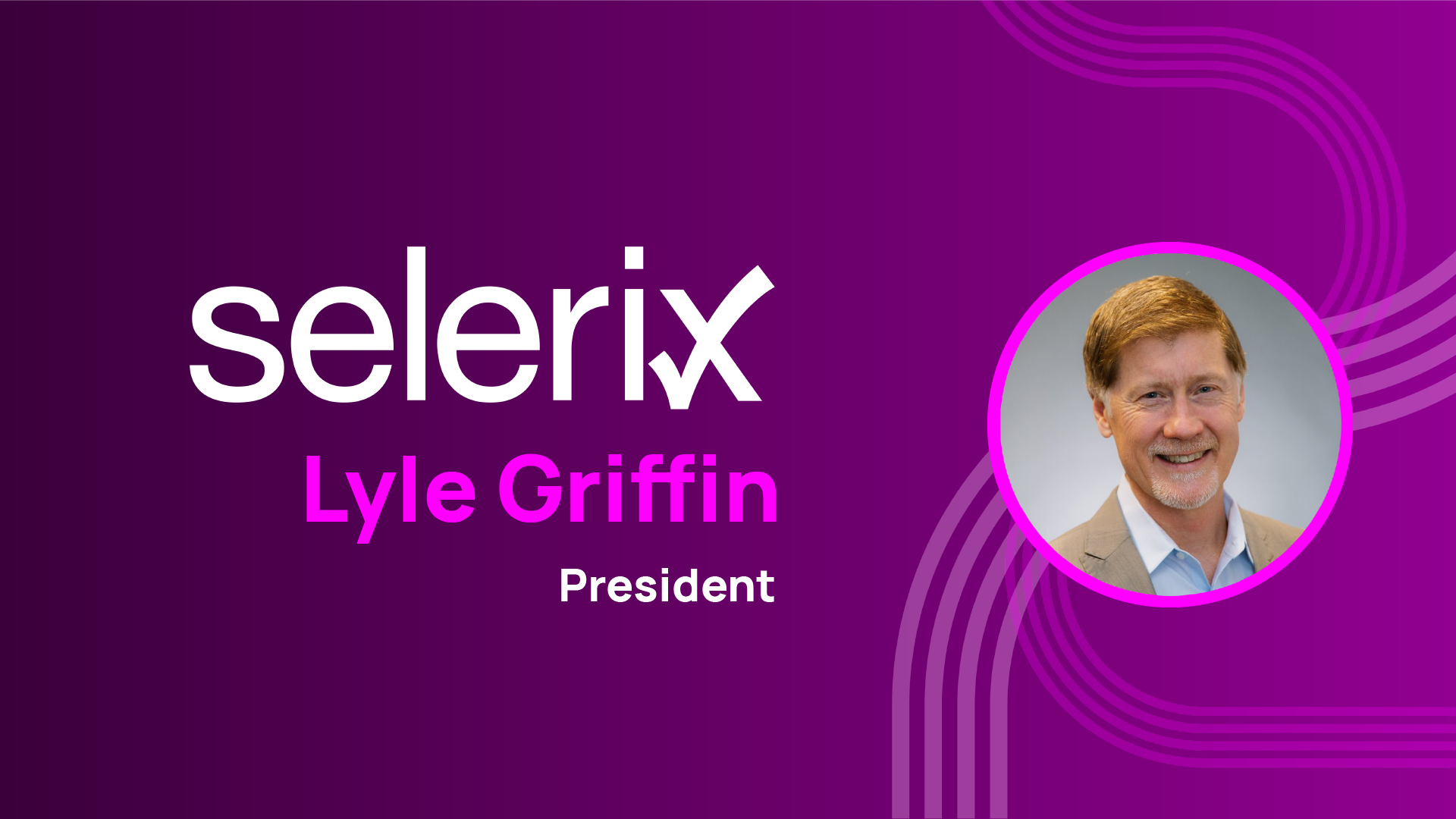
Welcome to the first installment of Ideon Insights, a new monthly interview series featuring thought leaders and innovators driving the benefits industry forward. In our first episode, we sat down with one of our technology partners, Lyle Griffin, president of Selerix, a leading benefits administration solution for brokers, employers, and carriers.
In this Q&A, Lyle shares his thoughts on the LIMRA Data Exchange (LDEx) standards, how the industry can facilitate more LDEx adoption, and how benefits data exchange will evolve over the next few years. Selerix and Ideon are both members of the Data Exchange Standards Committee tasked with developing the LDEx standards for the workplace benefits industry.
For Lyle’s complete thoughts on all-things LDEx, APIs, and data connectivity, watch the video here.
Below we’ve highlighted five key moments from the conversation.
IDEON: What’s the current state of LDEx adoption?
LYLE GRIFFIN, SELERIX: There are probably a dozen or so carriers that have stepped up and implemented LDEx in a really robust way. We’ve also been pleasantly surprised at the number of technology platforms that have been involved in developing the standard. That dialog between platforms and carriers is something that has been very refreshing.
What are the benefits of LDEx?
One, is just the speed of implementation, being able to set up your data connections quickly. Knowing that they’ll work as advertised is also very important.
As we move to API engagements, you’re really going to see the benefits. If we can move to something where we’re exchanging data in real-time, or as close to real-time as possible, the benefits back to the client or end-user are incredible.
Why is Selerix an advocate for data standards?
We’ve been very committed to implementing the standards since Day 1. What my team is telling me — the people who set up EDI connections with carriers — they’ve been very adamant that LDEx is good for them. They like it any time they can engage with people using the standard because it’s a concise way to start that dialog with the carrier. Having a common language really helps expedite the process.
How does Ideon help carriers and technology platforms use the LDEx format?
One of the most important things that [Ideon] brings to the table, is a fully formed view of how that data exchange ecosystem should work. Having a robust way to work with people on error resolution, initial engagement, data intake, being able to connect with an API or by exchanging files — I can see where this would be a very attractive proposition, not to have to build all of your business processes from scratch to take advantage of what a company like Ideon has to offer.
What’s the future of data exchange in the benefits industry?
In the long run, I think everyone’s vision is one of an interconnected ecosystem, an interconnected market, where trading partners exchange data more frequently and much more reliably than they do today. That’s what this is all about. As an industry, we’re still talking about this stuff, we’re still working on these challenges. So I think it’s going to take a while to realize that vision.
Stay tuned for new episodes of Ideon Insights each month. Subscribe to our newsletter below to stay in-the-know about Ideon and receive our latest content directly to your inbox.
Meet Brix — Now part of the Ideon ecosystem
At Ideon, we’re regularly expanding our network of carriers and technology platforms, from industry leaders with 100+ years of history to startups at the forefront of health and benefits innovation. We’re proud to introduce a new addition to the Ideon ecosystem: Brix, a group life insurance carrier offering affordable plans to small businesses.
In this video, John Flueckiger, Brix’s founder and CEO, shares the origin story of Brix, insights on their digital strategy, and how working with Ideon enables third-party platforms to quote Brix’s plans.
Here are three key takeaways from the video:
- Brix offers an easy and inexpensive way for small businesses to provide life insurance coverage to their employees.
- Through partnerships with other insurance providers, Brix offers employees the opportunity to enroll in additional life insurance coverage tailored to their individual needs.
- Brix leverages technology and agile distribution to provide a seamless digital process for brokers and employers. And, by leveraging Ideon, Brix gains representation on some of the leading third-party quoting platforms for group benefits brokers.
To learn more about Brix, check out the video and visit Brix.co. Platforms interested in quoting Brix products via Ideon’s API can contact us, here.
Employee Spotlight: Jacob Waters
At Ideon, we’re proud to have such a talented, diverse team leading the charge for a better and more connected health insurance and employee benefits industry. Our ongoing Employee Spotlight series showcases the people behind our product and unveils what life is like at Ideon. Next up… Jacob Waters, our Senior IT Support Specialist!
Name:Jacob Waters
Department: Business Operations
Title: Senior IT Support Specialist
Location: Colorado
Work
How long have you worked at Ideon?
In March, I will have worked at Ideon for one year. The time has flown by!
What projects are you excited to work on?
I am always excited to learn new ways of automating processes. In the next few months, IT will be tasked with implementing automatic software patching and management. This will help mitigate the need for direct interaction with IT and will be managed behind the scenes.
How have you grown professionally while on our team?
From a previous job, I participated in a HITRUST audit. However, I did not see the process in its entirety. During our recent HITRUST audit, I was able to be fully involved from start to finish. This has enabled me to add more skills to my toolbelt for future projects.
What attracted you to Ideon
The biggest thing that attracted me to Ideon was its people. Prior to being hired at Ideon, I spoke to a few employees that I knew at the company. Based on their experience and my interview, I knew that I was going to be surrounded by a good group of people. I enjoyed my previous job, but once I met with my Ideon teammates, I knew that this would be the best place for me. I could not be happier with my choice. The people, culture and ability to build knowledge without roadblocks is what makes this a special place.
What do you like about Ideon’s company culture?
Working at Ideon has been a refreshing experience. Right from the beginning I was able to develop great working relationships with my peers. Everyone is extremely knowledgeable and always willing to help out. Ideon’s culture allows us to develop solutions without constraints, helping us move forward in a timely manner.
Life
Favorite activity when you’re not working?
In my free time I enjoy playing basketball with my friends, working on home improvements and landscaping. I also enjoy spending quality time with my family.
Favorite place you’ve traveled?
My favorite place to travel was Nassau in the Bahamas. The beaches looked exactly like a Corona beer commercial. I have an upcoming trip in March to go to Hawaii for the first time, which might bump the Nassau trip to No. 2 on my favs list. That is just a guess.
Interesting fact about yourself… Go!
My brother and I owned a gaming cyber cafe called Tazraz. We held several tournaments for Starcraft, Team Fortress Classic, and Counterstrike.
Webinar: Ask Dan Anything
Want to learn more about how Ideon works? From the ultra-technical to the more thematic, Ideon CTO Dan Langevin answers it all in this ’Ask Me Anything” session.
Customers Have A Lot To Teach Us (Provided We Know How To Listen)

2023 employee benefits & workplace predictions

Ideon Achieves HITRUST Risk-based, 2-year Certification to Further Mitigate Risk in Third-Party Privacy, Security, and Compliance
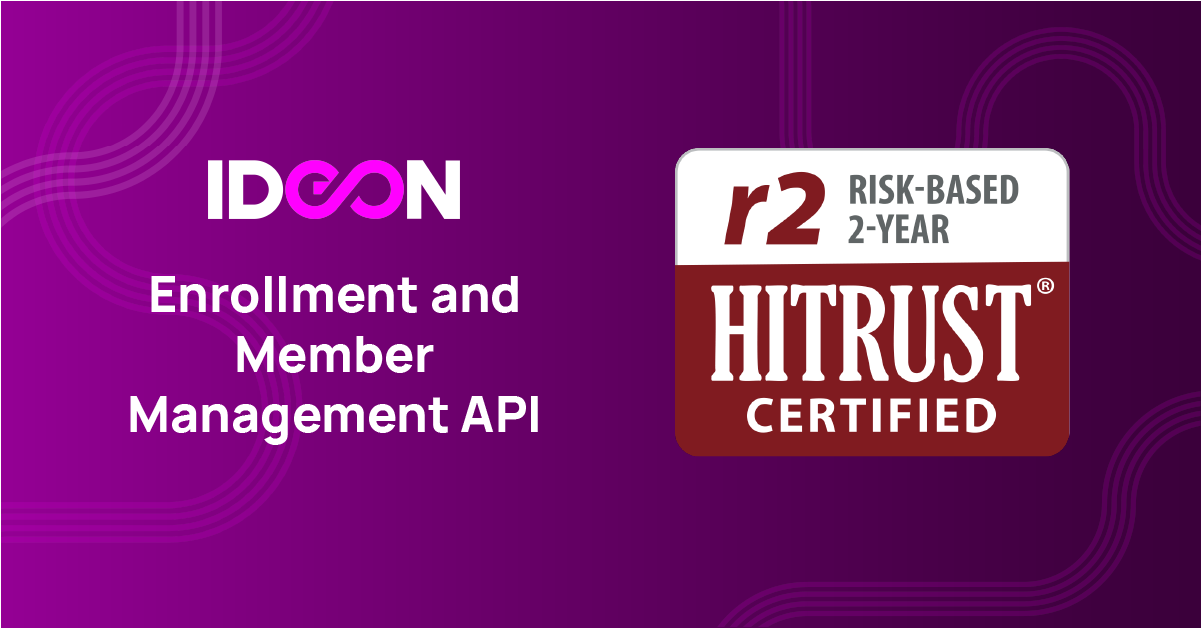
HITRUST Risk-based, 2-year Certification validates Ideon is committed to meeting key regulations and protecting sensitive information
NEW YORK, January 18, 2023 – Ideon, the API platform powering digital experiences in health insurance and benefits, today announced its Enrollment & Member Management API has earned Certified status for information security by HITRUST.
HITRUST Risk-based, 2-year (r2) Certified status demonstrates that the organization’s Enrollment & Member Management API has met key regulations and industry-defined requirements and is appropriately managing risk. This achievement places Ideon in an elite group of organizations worldwide that have earned this certification. By including federal and state regulations, standards, and frameworks, and incorporating a risk-based approach, the HITRUST Assurance Program helps organizations address security and data protection challenges through a comprehensive and flexible framework of prescriptive and scalable security controls.
“Every day, sensitive, personally identifiable employee benefits data flows through our platform and across the benefits industry ecosystem, making the security and protection of this data of the utmost importance,” said Michael W. Levin, co-founder and CEO of Ideon. “By achieving HITRUST Risk-based, 2-year Certification, Ideon is demonstrating to its customers and partners that it’s committed to meeting the highest standards of data protection and information security.”
“The HITRUST Assurance Program is the most rigorous available, consisting of a multitude of quality assurance checks, both automated and manual,” said Bimal Sheth, Executive Vice President, Standards Development & Assurance Operations, HITRUST. “The fact that Ideon has achieved HITRUST Risk-based, 2-year Certification attests to the high quality of their information risk management and compliance program.”
About Ideon
Ideon is the way health insurance carriers and employee benefits providers connect with technology partners to deliver seamless consumer experiences at every stage of the member journey. Ideon is not the websites or apps one uses to choose a plan or find a doctor. It is the infrastructure, the ‘pipes,’ that simplify the complex exchange of quoting, enrollment, and eligibility data between carriers and the technology partners so that they can, in turn, deliver health and employee benefits to hundreds of millions of Americans everyday. Ideon’s APIs transmit billions of data points between InsurTechs and insurance carriers, powering an amazing benefits experience for all. Faster. Better. Awesomely. To learn more, please visit: www.ideonapi.com.